 RTO Vehicle Information
Vehicle Fitness Certificate by RTO – Process, Fees, Renewal, Validity & Inspection Criteria
A Vehicle Fitness Certificate is an official document issued by the Regional Transport Office (RTO) to confirm that a vehicle is safe, roadworthy and fit to operate on public roads. Every vehicle in India—private or commercial—must maintain a valid fitness status to comply with the Motor Vehicles Act.
Why Fitness Certificate Is Mandatory?
A valid fitness certificate ensures that your vehicle meets safety, emission and roadworthiness standards. If a vehicle is found running without an FC, it is considered “unfit,” and penalties may apply. For commercial vehicles, fitness checks are strictly monitored due to continuous road usage.
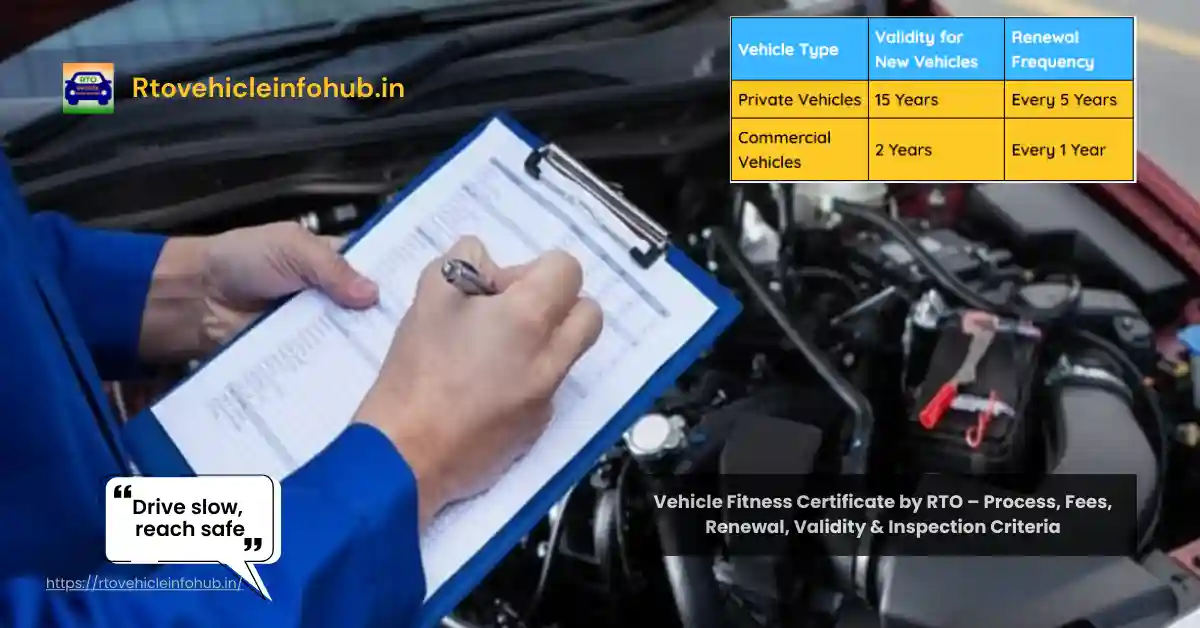
Fitness Certificate Validity
- Private Vehicles: Fitness is granted at the time of registration for 15 years, and later renewed every 5 years.
- Commercial Vehicles: New vehicles receive fitness for 2 years, and thereafter, renewal is required every year.
| Vehicle Type | Validity for New Vehicles | Renewal Frequency |
|---|---|---|
| Private Vehicles | 15 Years | Every 5 Years |
| Commercial Vehicles | 2 Years | Every 1 Year |
Documents Required for Fitness (New Vehicles)
Required Documents for Fitness Renewal (Commercial Vehicles)
| Document | Notes |
|---|---|
| RC (Registration Certificate) | Mandatory |
| Previous Fitness Certificate | To check past validity |
| Permit (Transport Vehicles) | For commercial usage |
| Road Tax Clearance | Up-to-date tax payment |
| Valid Insurance | Required |
| Pollution Certificate | Active PUCC |
| CNG Safety Report | If CNG fitted |
| Prescribed Fees | Based on vehicle category |
Required Documents for Private Vehicle Fitness Renewal
Below are the essential documents required for renewing the fitness certificate of a private vehicle at your local RTO office:
Form 25 – Application form for fitness renewal.
Original Registration Certificate (RC).
Valid Insurance Certificate.
Pollution Under Control Certificate (PUCC).
Road Tax Payment Proof.
Owner Identity Proof (Aadhaar, PAN, DL, etc.).
Address Proof (Aadhaar, Voter ID, Utility Bill).
Prescribed Fitness Renewal Fees.
Fitness Certificate Fees (RTO Charges in India)
Below are the standard RTO fitness certificate fees applicable for different vehicle categories across India.
Heavy Motor Vehicle (HMV)
₹500
Medium Motor Vehicle (MMV)
₹400
Light Motor Vehicle (LMV)
₹300
Three-Wheelers
₹100
Private Vehicles
Charged with registration/renewal
Included in registration or renewal process.
*Fees may vary by state. Additional inspection or late renewal charges may apply.
How to Apply for a Vehicle Fitness Certificate?
Applying for a Vehicle Fitness Certificate (FC) is mandatory for commercial vehicles, transport vehicles, and older vehicles. Follow these simple, SEO-optimized steps to apply online through the Parivahan portal.
- Visit the official Parivahan website: parivahan.gov.in → Online Services → Vehicle Related Services → Select your State/RTO.
- Open the Fitness Certificate (FC) section and choose Apply for Fitness Certificate / Renewal.
- Enter your Registration Number, Chassis Number (last 5 digits), and verify your vehicle details. Ensure insurance, PUCC, and tax records are valid.
- Book an RTO fitness inspection appointment at your nearest RTO. Choose a date and confirm the booking.
- Pay the Fitness Certificate fees online using UPI, card, or net banking.
- Visit the RTO on the scheduled date for your vehicle’s roadworthiness test (brakes, lights, emission, safety check).
- After approval, download the certifiedFitness Certificate (FC) PDF from the Parivahan portal.
How to Download Vehicle Fitness Certificate?
You can easily download your Vehicle Fitness Certificate (FC) online using the official Parivahan portal. Follow these simple steps:
- Visit the official Parivahan website: parivahan.gov.in → Online Services → Vehicle Related Services.
- Select your State / RTO from the dropdown list.
- Click on the Fitness Certificate (FC) section.
- Enter your Vehicle Registration Number and Chassis Number (last 5 digits) .
- View your Fitness Certificate status on the screen.
- Click Download to save your FC as a PDF.
Fitness Certificate for a Car / 4-Wheeler
- Visit parivahan.gov.in → Vehicle Related Services → Choose your State/RTO.
- Open the Fitness Certificate (FC) service for 4-wheelers.
- Enter your Car Registration Number and Chassis Number (last 5 digits).
- View the FC status and click Download Fitness Certificate (PDF).
Fitness Certificate for a Bike / 2-Wheeler
- Visit parivahan.gov.in or your State RTO portal.
- Select the Fitness Certificate (FC) section for 2-wheelers.
- Enter your Bike Registration Number and Chassis Number.
- Check fitness status and click Download FC PDF.
Fitness Certificate for Commercial Vehicles
- Go to parivahan.gov.in → Fitness → Select Commercial / Transport Vehicle.
- Enter Registration Number, Chassis Number, and permit details.
- Verify FC test results, emission test, and roadworthiness status.
- Click Download Fitness Certificate (PDF).
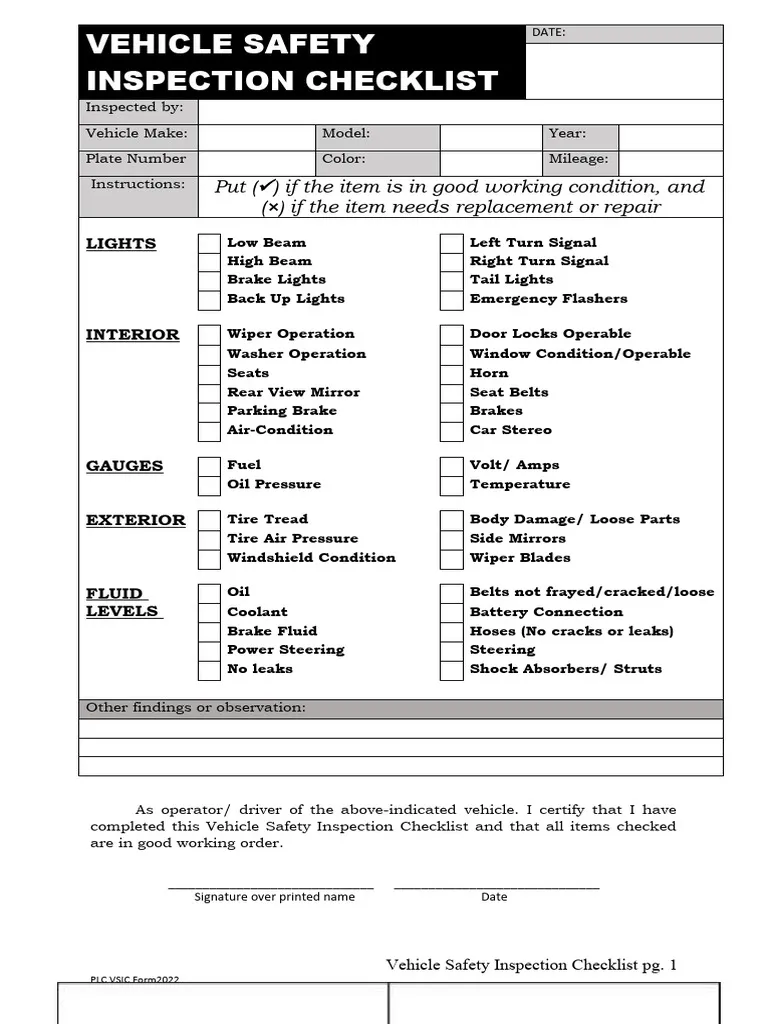
RTO Fitness Inspection Checklist (What Inspectors Check)
RTO inspectors evaluate the vehicle based on 20+ safety and mechanical parameters such as:
- Tyres – tread, cracks, wear
- Brakes – stopping distance, brake fluid, parking brake
- Engine Health – leakage, performance, noise
- Suspension System – leaf springs, bushings, shock absorbers
- Lights & Indicators – headlamps, brake lights, turn signals
- Horn & Electrical System
- Speedometer & Odometer Condition
- Body Condition – doors, windows, underbody, frame
- Safety Features – seat belts, emergency exits (buses)
- Pollution Levels – smoke meter/gas analyzer
- Chassis Number & Engine Number – visibility & correctness
- Wipers & Windshield Visibility
- Road Test – clutch, transmission, stability
Penalty for Expired Fitness Certificate (FC)
Driving a vehicle without a valid Fitness Certificate is a punishable offence under the Motor Vehicles Act, 1988.
| Vehicle Type | Minimum Penalty | Details |
|---|---|---|
| Private Vehicles | ₹2,000 | As per Section 192 |
| Commercial Vehicles | ₹5,000+ | Under Section 190(2) + state enforcement |
| Repeat Offence | Higher fines | Can include vehicle seizure/detention |
Why is the Penalty Imposed?
- Road Safety: An expired Fitness Certificate means the vehicle may not meet required safety standards such as brakes, tyres, and lights.
- Pollution Control: FC ensures compliance with emission norms through checks using smoke meters and gas analyzers.
- Roadworthiness Check: Ensures that critical components likeengine health, suspension, and brakes are in proper working condition.
- Legal Compliance: A valid Fitness Certificate is mandatory for commercial vehicles and strictly monitored by transport departments.
RTO Forms for Fitness Certificate
FAQs
Q1. Is fitness certificate required for private cars?
Yes, after 15 years, private vehicles must renew fitness every 5 years.
Q2. Can I drive without fitness certificate?
No. It is illegal and leads to challans and penalties.
Q3. Who conducts the fitness inspection?
RTO Motor Vehicle Inspectors check all safety and mechanical components.
Recent Posts
Updated
How to Check Vehicle Registration Online
Vehicle Fitness Certificate by RTO – Process

RTO Office Codes List for All States

Traffic Rules Every Driver Must Know

check RC Application Status Online

Apply Driving Licence Online
Update Your Mobile Number on Driving License
Free Vehicle Age Calculator Online
List of State RTO code List
- Andhra Pradesh Code Office List 2026
- Andaman and Nicobar Islands Code Office List 2026
- Arunachal Pradesh Code Office List 2026
- Assam Code Office List 2026
- Bihar Code Office List 2026
- Chandigarh Code Office List 2026
- Chhattisgarh Code Office List 2026
- Dadra and Nagar Haveli Code Office List 2026
- Daman and Diu Code Office List 2026
- Delhi Code Office List 2026
- Goa Code Office List 2026
- Gujarat Code Office List 2026
- Haryana Code Office List 2026
- Himachal Pradesh Code Office List 2026
- Jammu & Kashmir Code Office List 2026
- Jharkhand Code Office List 2026
- Karnataka Code Office List 2026
- Kerala Code Office List 2026
- Lakshadweep Code Office List 2026
- Madhya Pradesh Code Office List 2026
- Maharashtra Code Office List 2026
- Manipur Code Office List 2026
- Meghalaya Code Office List 2026
- Mizoram Code Office List 2026
- Nagaland Code Office List 2026
- Odisha (Orissa) Code Office List 2026
- Puducherry (Pondicherry) Code Office List 2026
- Punjab Code Office List 2026
- Rajasthan Code Office List 2026
- Sikkim Code Office List 2026
- Tamil Nadu Code Office List 2026
- Telangana Code Office List 2026
- Uttar Pradesh Code Office List 2026
- Tripura Code Office List 2026
- Uttarakhand Code Office List 2026
- West Bengal Code Office List 2026
Updated 2026 Database
Nagaraju
Information Publisher
Disclaimer
RTO Office Details is an informational portal designed to help users easily find RTO office information, vehicle registration details, driving licence status, and insurance-related information.
We are not an official government website. All data and links provided are for informational purposes only.
For any official verification please visit https://parivahan.gov.in/ or contact your respective State Transport Department.