 RTO Vehicle Information
Helmet Fine in India 2026: Rules, Penalty Amount, Pillion Helmet Requirements & State-wise Fines
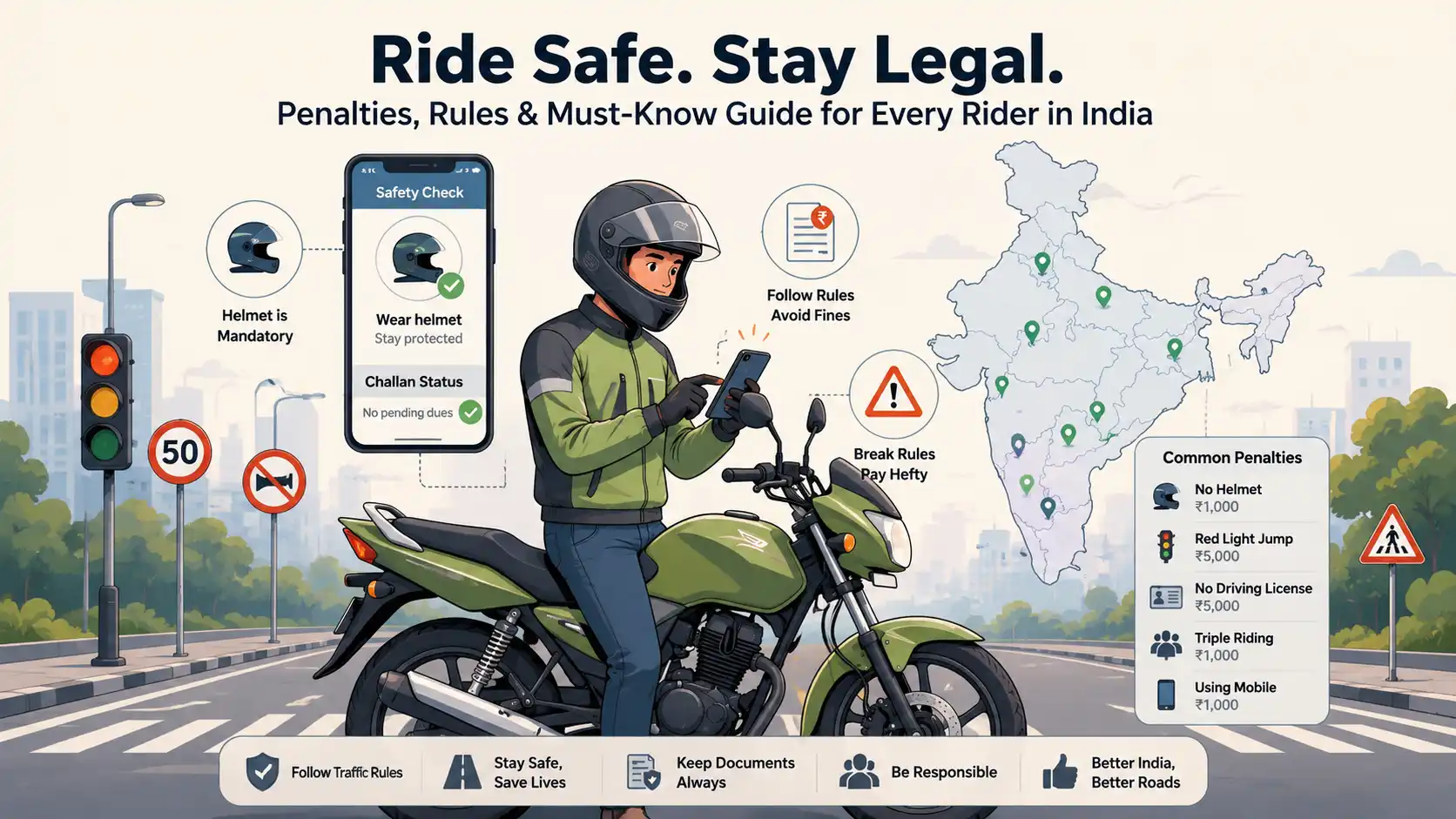
Wearing a helmet is mandatory for all two-wheeler riders in India. The rule is designed to improve road safety and reduce fatalities caused by head injuries. Under the Motor Vehicles (Amendment) Act, riders and pillion passengers can face a fine of ₹1,000 for not wearing a helmet while travelling on public roads.
Whether you ride a motorcycle, scooter, moped, or electric two-wheeler, understanding the latest helmet rules can help you avoid penalties and stay safe on the road.
What is the Helmet Rule in India?
The helmet requirement is governed by Section 129 of the Motor Vehicles Act, 1988. According to the law, every person riding or travelling on a two-wheeler must wear a protective helmet that meets approved safety standards.
Key Requirements
- Helmet is mandatory for riders.
- Helmet is mandatory for pillion passengers.
- Helmet should carry ISI certification.
- Rule applies to motorcycles, scooters and electric two-wheelers.
- Applicable on all public roads across India.
Helmet Fine in India
Riding without a helmet is a traffic violation that attracts a monetary penalty. The current fine prescribed under the Motor Vehicles Act is ₹1,000 per offence.
| Violation | Fine Amount |
|---|---|
| Rider without helmet | ₹1,000 |
| Pillion rider without helmet | ₹1,000 |
| Both rider and pillion without helmets | ₹2,000 |
State-Wise Helmet Fine in India
Many people believe helmet fines vary significantly from one state to another. However, after the Motor Vehicles (Amendment) Act, the penalty is largely uniform across India.
| State | Helmet Fine |
|---|---|
| Andhra Pradesh | ₹1,000 |
| Telangana | ₹1,000 |
| Karnataka | ₹1,000 |
| Tamil Nadu | ₹1,000 |
| Delhi | ₹1,000 |
| Maharashtra | ₹1,000 |
Is Helmet Mandatory for Pillion Riders?
Yes. Indian traffic laws require both the rider and the pillion passenger to wear helmets. If a pillion passenger is travelling without a helmet, a separate challan may be issued.
If both the rider and pillion passenger are not wearing helmets, each may be fined ₹1,000, resulting in a total penalty of ₹2,000.
Helmet Fine for Scooters and Electric Vehicles
The helmet rule applies equally to scooters, scooties, mopeds, and electric scooters. There is no separate fine structure based on vehicle type.
How CCTV Cameras Detect Helmet Violations
Modern traffic surveillance systems use AI-powered cameras to identify helmet violations automatically. These systems can capture images of two-wheelers, read number plates using ANPR technology, and generate e-challans without requiring a traffic officer on site.
Which Helmet is Legally Valid?
Riders should use helmets that comply with Bureau of Indian Standards (BIS) regulations and carry a valid ISI mark. Certified helmets provide better protection and help ensure compliance with traffic regulations.
- Look for the ISI mark before purchasing.
- Use the correct helmet size.
- Always fasten the chin strap properly.
- Replace damaged helmets immediately.
Tips to Avoid Helmet Challans
- Wear an ISI-certified helmet every time you ride.
- Ensure pillion passengers also wear helmets.
- Fasten helmet straps securely.
- Follow all traffic rules and regulations.
- Regularly check pending challans online.
Conclusion
Helmet laws in India are intended to improve road safety and reduce accident fatalities. The penalty for riding without a helmet is ₹1,000 and applies to both riders and pillion passengers. With increasing use of AI-enabled cameras and automated e-challan systems, compliance has become more important than ever. Wearing a certified helmet not only helps avoid fines but also protects lives.
Frequently Asked Questions
QWhat is the helmet fine in India?
The current helmet fine is ₹1,000 per offence under the Motor Vehicles Act.
QIs helmet mandatory for pillion riders?
Yes, pillion passengers must wear helmets on two-wheelers.
QDoes the helmet fine differ from state to state?
No. Most states follow the nationwide penalty of ₹1,000.
QCan CCTV cameras issue helmet challans?
Yes. AI-enabled traffic cameras can automatically detect helmet violations and generate e-challans.
QIs an ISI-marked helmet compulsory?
Yes. Riders should use BIS-approved helmets carrying the ISI mark.
Recent Posts
Updated
How to Check Vehicle Registration Online
Vehicle Fitness Certificate by RTO – Process

RTO Office Codes List for All States
Traffic Rules Every Driver Must Know

check RC Application Status Online

Apply Driving Licence Online
Update Your Mobile Number on Driving License
Free Vehicle Age Calculator Online
List of State RTO code List
- Andhra Pradesh Code Office List 2026
- Andaman and Nicobar Islands Code Office List 2026
- Arunachal Pradesh Code Office List 2026
- Assam Code Office List 2026
- Bihar Code Office List 2026
- Chandigarh Code Office List 2026
- Chhattisgarh Code Office List 2026
- Dadra and Nagar Haveli Code Office List 2026
- Daman and Diu Code Office List 2026
- Delhi Code Office List 2026
- Goa Code Office List 2026
- Gujarat Code Office List 2026
- Haryana Code Office List 2026
- Himachal Pradesh Code Office List 2026
- Jammu & Kashmir Code Office List 2026
- Jharkhand Code Office List 2026
- Karnataka Code Office List 2026
- Kerala Code Office List 2026
- Lakshadweep Code Office List 2026
- Madhya Pradesh Code Office List 2026
- Maharashtra Code Office List 2026
- Manipur Code Office List 2026
- Meghalaya Code Office List 2026
- Mizoram Code Office List 2026
- Nagaland Code Office List 2026
- Odisha (Orissa) Code Office List 2026
- Puducherry (Pondicherry) Code Office List 2026
- Punjab Code Office List 2026
- Rajasthan Code Office List 2026
- Sikkim Code Office List 2026
- Tamil Nadu Code Office List 2026
- Telangana Code Office List 2026
- Uttar Pradesh Code Office List 2026
- Tripura Code Office List 2026
- Uttarakhand Code Office List 2026
- West Bengal Code Office List 2026
Updated 2026 Database
Disclaimer
RTO Office Details is an informational portal designed to help users easily find RTO office information, vehicle registration details, driving licence status, and insurance-related information.
We are not an official government website. All data and links provided are for informational purposes only.
For any official verification please visit https://parivahan.gov.in/ or contact your respective State Transport Department.